Lomir Zingen!
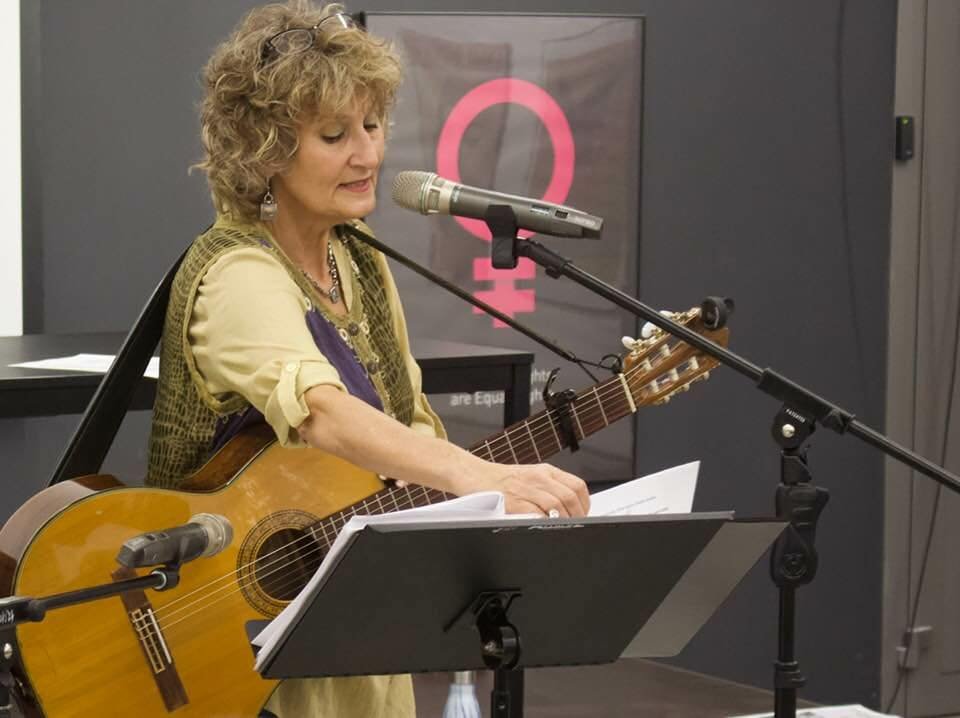
Yiddish Music Workshops and Performances
-
This is a singing course focused on Yiddish songs of the Jewish Labor Movement. Jews have always been at the forefront of social & political movements. What began as local organizing efforts in Poland and Russia continued in the United States, as Jewish immigrants quickly learned that labor in the New World needed unions too. Labor poets such as Morris Rosenfeld, David Edelshtat, and Avraham Reisen wrote songs of poverty, toil, and struggle that reflected the Jewish experience common to both immigrant life and life in the old world. The voices of women, who faced oppression and exploitation, are also represented. These Yiddish and English songs from both sides of the ocean chronicle this struggle for better pay and conditions in the workplace. Participants will learn these songs and their background, listen to recordings, and most importantly, sing! In the process, they will learn Yiddish vocabulary. Participants will receive song sheets in transliteration and English translation as well as sheet music and recordings.
-
Mordechai Gebirtig was the greatest of the Jewish folk troubadours in Poland before WWII. Gebirtig’s songs spoke to the sensibilities, emotions, and concerns of the common Yiddish-speaking folk of prewar and interwar Poland and Galicia. His songs resonated with everyone in the Yiddish cultural arena because they span a broad spectrum. He wrote both religious-flavored and secular reflections of daily Jewish working-class life, described its aspirations as well as its hardships, its nostalgia as well as its conflicts. He also touched on social, socioeconomic, and political themes and references, with lyrics that cried out against persecution, as in his so-called ghetto songs. Collectively, Gebirtig's songs may be viewed as a representative voice of a major part of that lost world of European Jewish life and Yiddish culture.
-
The American Yiddish musical theatre was a powerful force in the turn-of-the-century immigrant experience. The theatre brought to life the immigrant’s dreams, their difficulties in the new world and the nostalgia for their old country. We’ll sing songs by Molly Picon. Aaron Lebedeff, and the great composers - Alexander Olshanetsky, Abraham Ellstein, Joseph Rumsinsky, Sholom Secunda and others. Lomir Zingen!
-
Eastern European Yiddish Love Songs of a century ago reflected the life of the Jewish Pale of Settlement within the Czarist Empire, as well as the perennial struggle of the young with the old. Join Cindy Paley to learn and sing Yiddish songs of love, courtship, flirtation and marriage as well as beautiful songs that express feelings of sadness, longing, and lust.
-
From everyday love ditties, to an erotic, passionate tango, to justice-seeking women of the labor movement and the partisan resistance fighters in the Holocaust, these Yiddish folk songs provide a means of connecting with previous generations through the women’s perspective. New music by Polina Shepherd, Chava Alberstein and Beyle Schaechter-Gottesman will also be featured.
-
Immigration to America from Eastern Europe began in 1869 after waves of pogroms brought tragedy to Jews. “The Golden Land” promised prosperity and freedom and thus took on mythic proportions in the minds of the Jewish masses. Their dreams and struggles in America, as well as nostalgia for the old country, were brought to life in Yiddish theatre and literature. Come learn and sing these Yiddish songs of immigrant pain and joy. Selections range widely, including among others, a music hall number by Boris Tomashefsky, a turn-of-the-century Yiddish penny song (sung on New York streets by Yiddish peddlers), songs of labor exploitation, and songs of the Second Avenue Theatre.
-
Join Cindy Paley & her Klezmer Band for a rich and rousing concert of Yiddish Favorites Old & New! Listen to the vibrant and colorful songbook of Eastern European Jewry’s unique cultural history. Popular Yiddish folk songs from the former Soviet Union as well as songs by Itzik Manger and Mordechai Gebirtig are sure to stir your nostalgia. Newer melodies by Michael Alpert, Polina Shepherd, Chava Alberstein and Arkady Gendler will remind you that Yiddish is timeless, thriving and meaningful today.
-
Yes, we sang and composed during the years 1939 – 45. Songs, poems, and orchestral pieces continued to be written and performed even under the deathly conditions in ghettos and camp. In the ditches, in the bunkers, in the sewer pipes, on the threshholds of the gas chambers, Jews searched for strength in prayer and in song.
-
Jews have ever been at the forefront of social and political movements. We will hear songs by labor, feminist, peace and environmental activists of the past 125 years, songs by Jewish songwriters which inspired others to action.